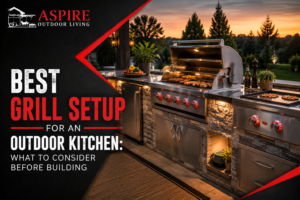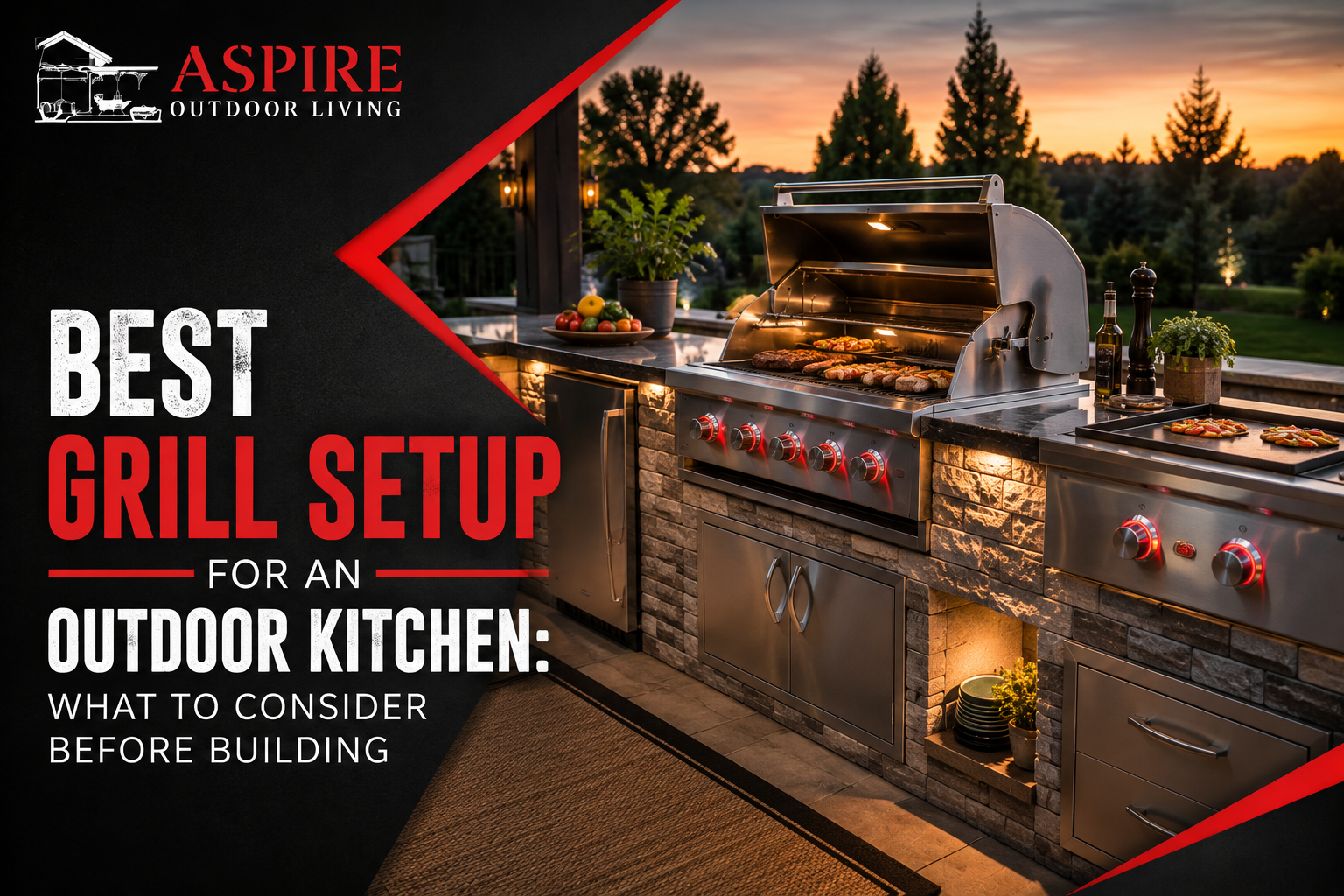
Picking a grill used to be a simple decision , gas or charcoal, done. Building an actual outdoor kitchen around that decision is a different project entirely. Fuel type, cooking style, layout, and how the grill integrates with the rest of the space all start to matter in ways they never did with a freestanding backyard grill on wheels. Getting this right before construction starts is a lot easier than retrofitting a built-in island after the fact.
Key Takeaways
- Gas, charcoal, and pellet grills each suit a different cooking style , there’s no universal “best” fuel type.
- A griddle isn’t a replacement for a grill; most serious outdoor kitchens benefit from having both.
- Built-in grills need to be sized and vented correctly from the start, since retrofitting later is far more disruptive than planning ahead.
- Stainless steel construction (304 grade specifically) matters for long-term durability against weather exposure.
- Layout , where the grill sits relative to prep space, seating, and traffic flow , affects usability as much as the equipment itself.
Start With How You Actually Cook
Before comparing specific grill models, it’s worth being honest about cooking habits. Someone who grills burgers and hot dogs a few times a summer has very different needs than someone who wants to slow-smoke a brisket for eight hours or sear steaks at restaurant-level heat. The “best” outdoor kitchen grill setup is the one that matches actual usage, not the most feature-packed option on the showroom floor.
Gas Grills: The Everyday Workhorse
Gas grills remain the most common choice for outdoor kitchens, largely because of convenience. They heat up quickly, offer precise temperature control with the turn of a knob, and clean up faster than charcoal or pellet alternatives. For a built-in setup, natural gas grills that connect directly to an existing gas line eliminate the hassle of swapping propane tanks entirely , a genuine advantage for a permanent outdoor kitchen installation rather than a portable grill.
Best for: Frequent grillers who want fast heat-up, easy temperature control, and minimal cleanup between uses.
Charcoal Grills: Flavor-First Cooking
Charcoal still has a loyal following for one simple reason , flavor. The smoky char that comes from charcoal combustion is genuinely different from gas, and for a lot of serious backyard cooks, that difference is the whole point. The trade-off is longer heat-up time and more hands-on management throughout the cook.
Best for: Homeowners who prioritize flavor and don’t mind a more involved cooking process.
Pellet Grills: Versatility and Set-and-Forget Control
Pellet grills have grown significantly in popularity, and for good reason , they combine elements of charcoal smokers, gas grills, and kitchen ovens into one appliance. Fueled by wood pellets and controlled through an electric system that automatically feeds fuel and regulates airflow, pellet grills maintain consistent temperatures with far less manual attention than charcoal.
Pellet grills also offer an unusually wide functional range, typically cooking anywhere from 150°F up to 500°F or higher depending on the model , which means the same appliance can handle low-and-slow smoking, high-heat searing, baking, and even rotisserie cooking. Built-in pellet grills are specifically designed to integrate into outdoor kitchen islands just as seamlessly as gas options.
Best for: Homeowners who want smoking, grilling, and baking flexibility in a single built-in appliance.
Comparing Gas, Charcoal, and Pellet Grills
| Feature | Gas | Charcoal | Pellet |
| Heat-up time | Fast | Slow | Moderate |
| Temperature control | Precise, instant | Manual, harder to regulate | Automated, wide range |
| Flavor profile | Milder | Strongest smoky flavor | Smoky, customizable by pellet type |
| Hands-on involvement | Low | High | Low to moderate |
| Versatility | Grilling-focused | Grilling-focused | Grill, smoke, bake, rotisserie |
| Built-in integration | Excellent, especially with gas line hookup | Good | Excellent |
Don’t Forget the Griddle
A griddle isn’t competing with a grill for the same job , it’s solving a different one. Where a grill cooks over direct flame with grates, a griddle uses a flat, evenly heated cooking surface, which makes it far better suited for breakfast foods, smash burgers, stir-fry style cooking, and anything that benefits from consistent, even heat rather than open-flame char marks.
Most well-planned outdoor kitchens include both a grill and a griddle rather than choosing one over the other, since they genuinely serve different cooking styles and expand what the space can actually handle , from a Saturday morning breakfast spread to a Saturday night cookout.
Outdoor Kitchen Appliances Worth Considering Alongside the Grill
Beyond the grill and griddle themselves, a few additional components round out a genuinely functional outdoor cooking setup:
- Side burners , useful for sauces, sides, or anything that needs stovetop-style cooking outside
- Storage doors and drawers , keep tools, utensils, and accessories organized and protected from weather
- A dedicated prep area , counter space near the grill makes the entire cooking process smoother and safer
Materials Matter More Than People Expect
Outdoor cooking equipment lives outside permanently, which means it’s exposed to rain, humidity, temperature swings, and UV exposure year-round. This is exactly why construction quality matters as much as the grill’s features. 304-grade stainless steel is a common benchmark for outdoor-rated grills, griddles, and cabinetry specifically because of its strong corrosion resistance , a meaningfully more durable choice than lower grades of steel that can rust or degrade faster under constant outdoor exposure.
Do This, Not That
- Do think about your actual cooking habits before choosing a fuel type. Don’t default to whichever grill looks most impressive , the best setup matches how you actually cook, not how you imagine cooking.
- Do plan for both a grill and a griddle if your budget allows. Don’t assume one appliance can fully replace the other , they’re built for different cooking styles.
- Do ask about steel grade and construction quality for built-in equipment. Don’t assume all “stainless steel” outdoor appliances are built to the same standard.
- Do plan gas line or fuel access early in the design process. Don’t finalize the layout before confirming utility access , retrofitting a gas line after construction is far more disruptive than planning for it upfront.
A Familiar Scenario
Picture a family finally ready to build the outdoor kitchen they’ve talked about for years. Early conversations focus entirely on the grill , gas versus charcoal, brand names, burner counts. But once the actual cooking habits get discussed, it becomes clear that the family loves weekend pancake breakfasts just as much as summer cookouts. That realization shifts the plan from “just a grill” to a combined grill-and-griddle layout, which ends up getting far more consistent use than a grill-only setup ever would have.
Building the Outdoor Kitchen Setup That Actually Fits Your Life
The right grill setup isn’t about picking the most expensive or feature-heavy option , it’s about matching fuel type, equipment, and layout to how the space will actually be used. Aspire Outdoor Living’s Grills and Griddles offerings include 304-grade stainless steel outdoor cooking equipment from ProFire Grills, giving Central Ohio homeowners gas, charcoal, and pellet options built specifically for long-term outdoor durability.
Frequently Asked Questions
What’s the best grill setup for an outdoor kitchen?
It depends on cooking habits. Gas offers convenience and fast heat-up, charcoal delivers the strongest smoky flavor, and pellet grills provide versatility across smoking, grilling, and baking in one appliance. Many well-designed outdoor kitchens include a grill alongside a griddle for maximum flexibility.
Is a pellet grill better than a gas grill for an outdoor kitchen?
Neither is universally better , pellet grills offer more cooking versatility (smoking, baking, rotisserie) with automated temperature control, while gas grills offer faster heat-up and simpler day-to-day use.
Do I need both a grill and a griddle in my outdoor kitchen?
Not strictly, but many homeowners find real value in having both, since a griddle handles foods like breakfast items and smash burgers that don’t suit a traditional grill grate well.
What material should outdoor kitchen appliances be made of?
304-grade stainless steel is a strong benchmark for outdoor cooking equipment, offering meaningfully better corrosion resistance than lower-grade steel for appliances that live outside year-round.
Can I connect a built-in grill to my home’s natural gas line?
Yes, many built-in gas grills can connect directly to an existing natural gas line, which eliminates the need to manage and swap propane tanks for a permanent outdoor kitchen setup.
What should I plan for before installing a built-in grill?
Utility access (gas line or propane setup), proper ventilation, and layout relative to prep space and seating should all be planned before construction begins, since retrofitting these elements later is far more disruptive.
How hot can a pellet grill get compared to a gas grill?
Pellet grills typically range from around 150°F up to 500°F or higher depending on the model, giving them a notably wide range for both low-and-slow smoking and high-heat searing.
Does Aspire Outdoor Living install both grills and griddles for outdoor kitchens?
Yes. Aspire Outdoor Living offers gas, charcoal, and pellet grills along with griddles and other outdoor cooking equipment from ProFire Grills, built with 304-grade stainless steel for lasting outdoor durability.