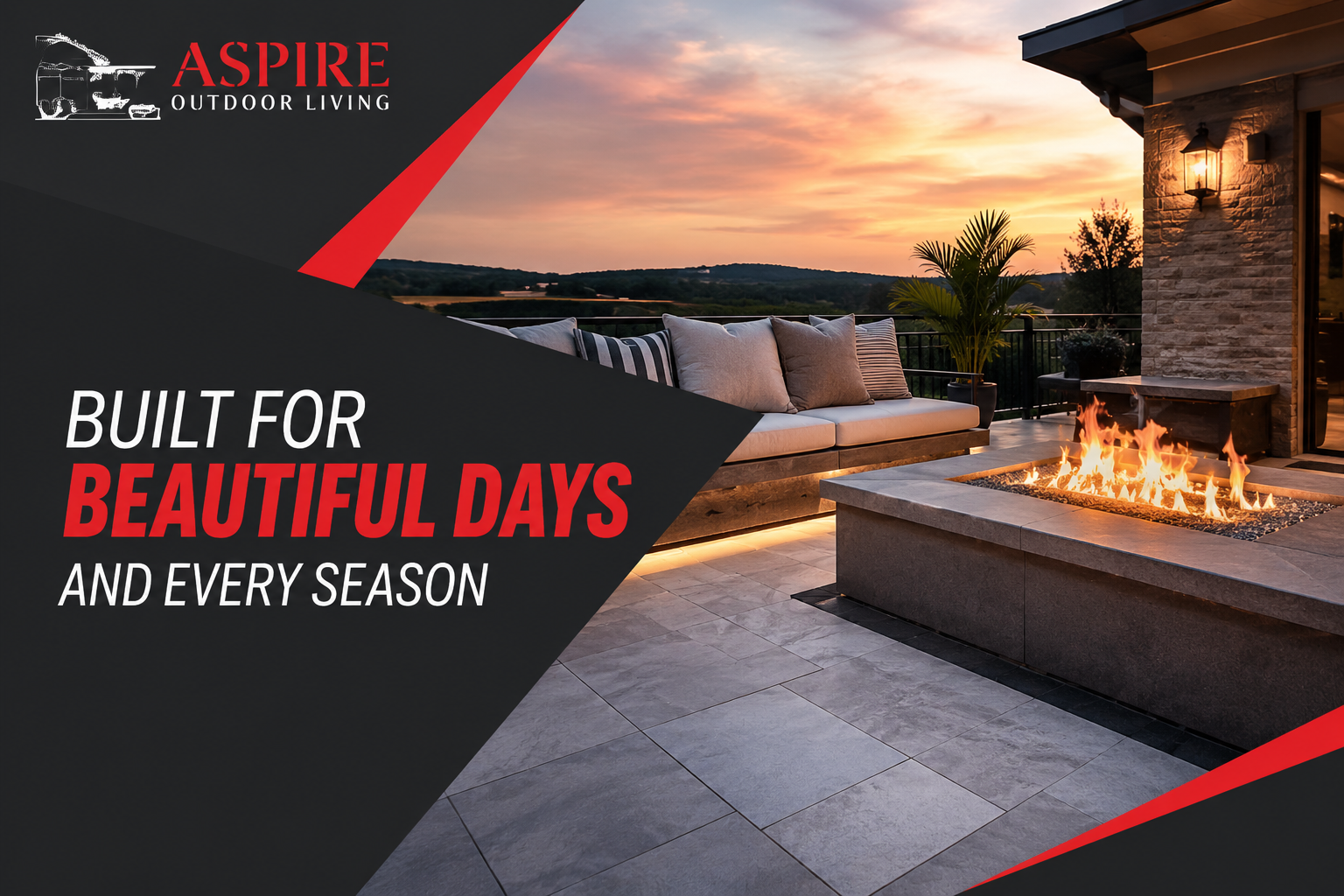
The patio itself often gets less attention than the furniture, the fire pit, or the pergola going on top of it, but the flooring is what actually determines how the space holds up. A beautiful outdoor sofa set on cracked, uneven concrete still looks like a backyard that needs work. The floor is the foundation everything else sits on, literally and visually, which makes it one of the most consequential decisions in any patio project.
Key Takeaways
- Pavers and tile are the two most popular premium patio flooring options, each with different strengths.
- Porcelain tile is widely considered the top choice for outdoor durability, thanks to low porosity and weather resistance.
- Pavers generally handle heavy loads and ground movement better than tile, especially in freeze-thaw climates.
- Low-maintenance flooring options exist at almost every price point, from composite pavers to sealed porcelain.
- The right choice depends less on which material is “best” overall and more on climate, use case, and design goals.
What Makes Patio Flooring “Good” in the First Place?
Before comparing specific materials, it helps to define what’s actually being evaluated. The best outdoor flooring for a given patio balances four factors:
- Durability, resistance to cracking, fading, staining, and weather damage
- Slip resistance, especially important near pools or in wet climates
- Maintenance, how much upkeep the material realistically requires
- Style, how well it fits the home’s exterior and the homeowner’s design goals
No single material wins on all four categories simultaneously, which is exactly why “best” tends to depend on the specific patio rather than one universal answer.
Patio Pavers: A Closer Look
Pavers remain one of the most popular patio flooring ideas, and for good reason, they’re versatile, come in a wide range of materials, and hold up well under real-world use.
Traditional Stone or Concrete Pavers Classic pavers offer a timeless look and genuine durability, but they’re heavier and typically more involved to install than composite alternatives.
Composite Pavers Modern composite paver systems, often made from recycled materials, offer a lighter-weight, faster-to-install alternative to traditional stone. They’re built to resist staining, cracking, and fading, and many use a grid or interlocking system that simplifies installation over an existing patio surface rather than requiring a full tear-out.
Rubber Pavers A more budget-conscious option, rubber pavers offer strong slip resistance and shock absorption, along with built-in mold and mildew resistance, making them a practical choice for pool decks and family-heavy backyards.
Patio Tile: A Closer Look
Tile brings a different aesthetic to the table, often sleeker and more design-forward, along with its own durability profile.
Porcelain Tile Porcelain is widely considered the top choice for outdoor tile applications because of its durability, low porosity, and resistance to weather conditions. Outdoor-rated porcelain often includes textured, slip-resistant surfaces, which makes it a strong option for patios, walkways, and pool surrounds alike.
Natural Stone Tile Natural stone offers a premium, organic look, but it’s generally more porous than porcelain, which means it often benefits from periodic sealing to resist staining, especially in humid or rainy climates.
Patio Pavers vs. Tile: How They Actually Compare
| Factor | Pavers | Tile |
| Durability under heavy loads | Generally stronger | Good, but can be more load-sensitive |
| Freeze-thaw resistance | Handles ground movement well | Can crack if not properly installed |
| Installation | Grid systems make some options fast to install | Requires level base and proper mortar/grout |
| Design flexibility | Wide range of colors/patterns | Sleek, modern design options |
| Cost | Varies widely by material | Can be less expensive than natural stone, depending on choice |
| Maintenance | Low to moderate depending on material | Low for porcelain; higher for natural stone |
Neither option is universally “better”, pavers tend to have an edge in climates with significant freeze-thaw cycles or heavy furniture loads, while tile often wins on sleek, modern aesthetics and design flexibility.
Low-Maintenance Patio Flooring Options
For homeowners prioritizing minimal upkeep, a few options stand out:
- Porcelain tile, low porosity means it resists staining without regular sealing
- Composite pavers, resistant to fading and cracking with essentially no sealing required
- Rubber pavers, naturally mold- and mildew-resistant, easy to hose down
By contrast, natural stone options generally require more attention, periodic sealing, more careful cleaning products, to maintain their appearance long-term.
Durable Patio Flooring for Different Climates
Freeze-Thaw Climates Pavers, particularly those installed over a properly prepared base, tend to handle ground movement from freezing and thawing better than large-format tile, which can be more prone to cracking under the same conditions.
Hot, Sun-Intensive Climates UV-stable materials matter most here, composite pavers and porcelain tile both resist fading better than lower-grade plastic or unsealed natural stone.
Pool-Adjacent Patios Slip resistance becomes the priority. Textured porcelain and rubber pavers are both strong choices specifically because they’re designed with wet-surface traction in mind.
Do This, Not That
- Do match your flooring choice to your climate’s specific challenges (freeze-thaw, intense sun, high moisture). Don’t choose a material based purely on appearance without checking its performance in your region.
- Do consider composite or resurfacing paver systems if you’re covering an existing damaged patio. Don’t assume a full tear-out is always necessary, some systems are specifically designed to install over existing concrete.
- Do prioritize textured, slip-resistant materials near pools or in wet climates. Don’t choose a smooth, polished finish for a pool deck purely for looks.
- Do ask about sealing requirements before choosing natural stone. Don’t assume every “premium” material is automatically low-maintenance, porous materials generally need more upkeep than porcelain or composite options.
A Familiar Scenario
Picture a homeowner with an old, cracked concrete patio that’s become an eyesore rather than a gathering space. A full tear-out and rebuild feels like an intimidating, expensive undertaking. A composite paver resurfacing system solves the problem differently, installing directly over the existing concrete with a grid system that speeds up the process significantly, turning a weathered patio into a durable, stylish surface without the cost and disruption of demolition.
Choosing the Right Patio Flooring for Your Space
The right patio floor covering comes down to matching the material to how the space will actually be used , durability needs, climate, maintenance tolerance, and design goals all factor in. Aspire Outdoor Living’s Patio Floor Coverings team works with Central Ohio homeowners to select and install durable, attractive pavers and tile designed to enhance both the look and function of a patio space, backed by decades of outdoor living industry experience.
Frequently Asked Questions
What is the best patio flooring for outdoor spaces?
It depends on priorities, porcelain tile is widely considered a top choice for durability and low maintenance, while pavers, especially composite options, offer strong performance and design flexibility across a wide range of budgets.
Is it better to use pavers or tile for a patio?
Pavers generally handle heavy loads and freeze-thaw climates better, while tile, particularly porcelain, offers a sleeker, more modern look with strong durability and low maintenance. The better choice depends on climate and design goals.
What is the most durable outdoor patio flooring?
Porcelain tile and composite pavers are both known for strong durability, resisting staining, cracking, and fading better than many traditional materials.
Can I install new patio flooring over an existing damaged patio?
In many cases, yes. Composite paver resurfacing systems are specifically designed to install over existing concrete, avoiding the cost and disruption of a full tear-out.
What’s the most low-maintenance patio flooring option?
Porcelain tile and composite pavers both require minimal upkeep, no regular sealing, strong resistance to staining and fading, and easy cleaning with just water and mild detergent.
Is patio tile slippery when wet?
It depends on the finish. Textured, outdoor-rated porcelain tile is specifically designed with slip resistance in mind, making it a strong choice for pool decks and rainy climates.
How do I choose patio flooring for a pool deck?
Prioritize slip-resistant, water-friendly materials like textured porcelain tile or rubber pavers, both of which are designed to handle wet, high-traffic conditions safely.
Does Aspire Outdoor Living install both pavers and tile for patios?
Yes. Aspire Outdoor Living offers patio floor coverings using durable, attractive pavers and tile designed to enhance the look and functionality of outdoor living spaces.